

Nov 4, 2026 · @Wayan
An extreme passion for languages. Photography. Graphic design. Travel. Communication training. A life full of passions, combined into one job.
We often hear that we need to choose ONE professional path. That we need to focus on ONE specific skillset to achieve anything. That diplomas and certificates are the key to success.
Well, let me disagree. And let me tell you why, with the only proof I really have: my own path, from the age of 16 until today.
No diploma, a print shop, and a pair of scissors
I left school early. At 16 I was doing whatever work I could find: logistics, printing, riding as co-driver in a truck delivering drinks to bars and restaurants. At 18 I was on my own: a job, an apartment, bills to pay. Surviving.
Then came two years in a print shop. A powerful, forced start.
This was before the computer revolution. We designed with rulers, pens, cutters and a compass. Every layout was built by hand, and that trained my eye in a way no software ever could: what makes content interesting, what is necessary, what is noise.
I also ran the stationery shop attached to it. Arranging, decorating, keeping it clean and appealing. And above all, talking to customers. Architects, studios, shops, all kinds of businesses came through that door. One of them was a young comic author who would soon become famous: Zep, the creator of Titeuf.
I learned to listen and to ask the right questions. I still use that every single day.
One badly paid job, five skillsets
After a few more odd jobs (bar, restaurant, logistics for a watch company), I found an interesting but underpaid job: hearing aid technician at Starkey.
On paper, a low-wage technical job. In reality, a school:
• One month at their European hub in Manchester, where my English improved faster than in any classroom, I was 21 and I remember that trip as if it was yesterday.
• Sculpting individual moulds and shells by hand, working with monomers, polymers and silicone
• My first Mac, my first Photoshop, designing the advertising for the products I built
• My first sales experience, on the road, visiting retailers and distributors
And then something nobody expected. The products I introduced became known for their quality, and I was invited to sit on the jury of the Swiss national exams for audioprosthetists. The youngest expert at the table. Without a single degree in the field.
Most reactions were positive. One very influential reseller, unhappy with the grade I gave her, complained to the board. She was too important to them, so of course she was "regraded" "properly".
Lesson learned: merit can open the door to the room. It doesn't always win the vote inside it.
A reception desk as a communication lab
After two years, I left Starkey for a simple reason: the salary was half of what I could earn elsewhere. I became a receptionist at a Renault dealership, with zero background in the car industry.
That desk became my laboratory. I tested every kind of communication I could think of and watched how customers behaved, reacted, replied. I started reading about NLP. Nobody asked me to, I was just hooked.
That's when I realized I had two choices in life:
cry every Sunday night about going to work the next day, or wake up every morning pushing myself to learn something new, every single day. And at 54, I'm still at it!
When Renault rolled out its new corporate identity, I spent a weekend painting the workshop walls and ceiling in the brand's colours. I didn't know it then, but designing a brand would come back into my life many years later.
One day I attended a training at Renault's headquarters and had to pass on everything to my colleagues. So we held a "micro training" in the workshop, among the cars and the mechanics. My very first public speaking experience. The compliments afterwards showed me a direction I would follow for the next twenty years.would follow for the next twenty years.
Nokia, German, and a lesson in belonging
In 1997, the year of my 25, through a friend, I heard Nokia was looking for someone for its customer helpline, speaking French, English and German. I had two of the three. They gave me a chance anyway, and I moved from the French-speaking part of Switzerland to the German-speaking one.
I struggled to learn German and Swiss German at the same time. They are very different, and in Switzerland it makes a massive difference: people behave completely differently when you speak their language. Even today, fluent, I still feel the distance of being the foreigner in the conversation. Language isn't just a skill on a CV. It's a key to belonging, and not every key opens every door.
Nokia then opened one of its very first stores in Europe, and I became its manager. Hiring staff, running the shop, the glamour of the Nokia 8210 era... and the repair centre in the same building. Angry customers, sometimes aggressive ones (I even had a handgun pointed at me once, because the customer's phone couldn't be repaired. No joke!). With distance, I learned something essential there: the reason people react the way they do is often not the one they show. Understanding fear and frustration is key in sales.
Until 2004 I moved through roles at Nokia's Swiss distributor and then at a major phone distributor, up to key account manager. I was already working from home, driving from dealer to dealer. On top of that, I was handed a neglected webshop doing about 10K a month, built abroad and never properly adapted to Switzerland's three languages.
So I went back to school. Every Saturday for a year, to learn web design. A year later, the shop reached one million in the first three months of the year.
Three days later, I was fired. No explanation.
It left a scar, a deep one... with a question still open today: what did I do wrong, or did I?
Two years of "no", and a company born of necessity
Then came two years of unemployment. One rejection after the next. Psychologically, one of the hardest periods of my life.
But I went back to something that had always been there: photography. My first camera was bought with my first salary, at 18 in Geneva: a Pentax P30N (I still own it). Without really knowing it, I was building my independence. Writing my own invoices, doing my accounting, hunting for contracts and connections, learning studio photography and lighting, slowly building my gear. I designed flyers for dance clubs. Switzerland's unemployment office supported me in the process, covering my income in the low months and extending my time when I could cover it myself, all perfectly legal.
Years earlier, as a participant at the Nokia Academy, I had met trainers working for an Austrian agency. They had the life I wanted, and I quietly hoped to join them one day. In November 2006, two of them left. Two seats opened. The condition: work as a freelancer.
At the end of 2006, when my unemployment allowance ended, I had no other option than becoming self-employed. That's how FlySign became official. A contraction of Flyer Design, a nod to "fly" in New York slang, and later, rightfully, a perfect fit for my passion for drones.
My first booking: the Nokia Academy. Full circle.
That agency also worked for car brands, and with my telecom background, they asked me to join car trainings as a multimedia trainer, back when GPS and connectivity were brand new in cars. When Renault launched its Zero Emission department in 2010, I naturally became an EV trainer. It's also where I met Hubert, who founded Formation4You in 2016 and with whom I've worked ever since.
And then, one day, my former boss from the dealership walked into my training. As a participant. He remembered me perfectly, and was probably a little surprised. I didn't feel any revenge. I felt grateful. Years earlier he had given me a first rung, and here I was, further up the ladder.
Nobody checked my diploma that day.
A volcano, a golden cage, and a ticket to wherever
In spring 2010, an Icelandic volcano grounded every plane in Europe. I was stuck in Paris after a weekend trip, and spent the evening with a friend reshaping life, talking about Gott und die Welt, as the Germans say.
That night I realised I wasn't happy in Zurich. My life felt like a golden cage. I needed more freedom, more space, more adventure.
So I kept my freelance work in Switzerland with a shared room in Zurich for a few days a month, and rented another room in Valencia for the rest. Swiss work, Spanish life. Swiss wages, Spanish cost of living and weather. I did that for three years.
Then two relationships changed the course. The first took me back to Zurich, the second took my heart. When it ended, I had to leave to avoid breaking myself.

In June 2016, I set off on a trip to wherever. Not to find myself. Just to breathe. Valencia. Constanta in Romania. Istanbul, where I landed one hour before the coup attempt. That night we heard gunfire in the distance and army helicopters over the city. The next morning I walked the ghostly empty streets with my camera, and met Anna, an American traveller with a camera on her shoulder. We photographed people waving flags, celebrating the failed coup. And she said something I never forgot: when you meet people on a trip, you sometimes share more than with your closest friends, because you know you won't see each other again. You can be more yourself, or whoever you wish to be.
That sentence became a photo project: Best Friend For A Day, portraits of people I meet along the way.


Then Singapore, my very first step in Asia. Love at first sight: the culture, the food, the atmosphere. Then Bali, the first peak of my new life.
The trainings were still there. I prepared them remotely, flew to Europe for the training week, then flew back to Asia until the next one. Three to six training weeks a year, translations and admin in between, a flight every four to six weeks, and a new destination each time. Location-independent, years before the world called it remote work.
Not to brag, but to show the diversity of cultures, languages and habits I got to live in, here is what those years looked like:
• 2016: Switzerland → Spain → Romania → Turkey → Singapore → Bali → Thailand → Zurich → Thailand
• 2017: Thailand → Bali → Thailand → Vietnam → Thailand → Switzerland → Austria
• 2018: Thailand → India → Bali → Japan → Bali → Switzerland → Marseille
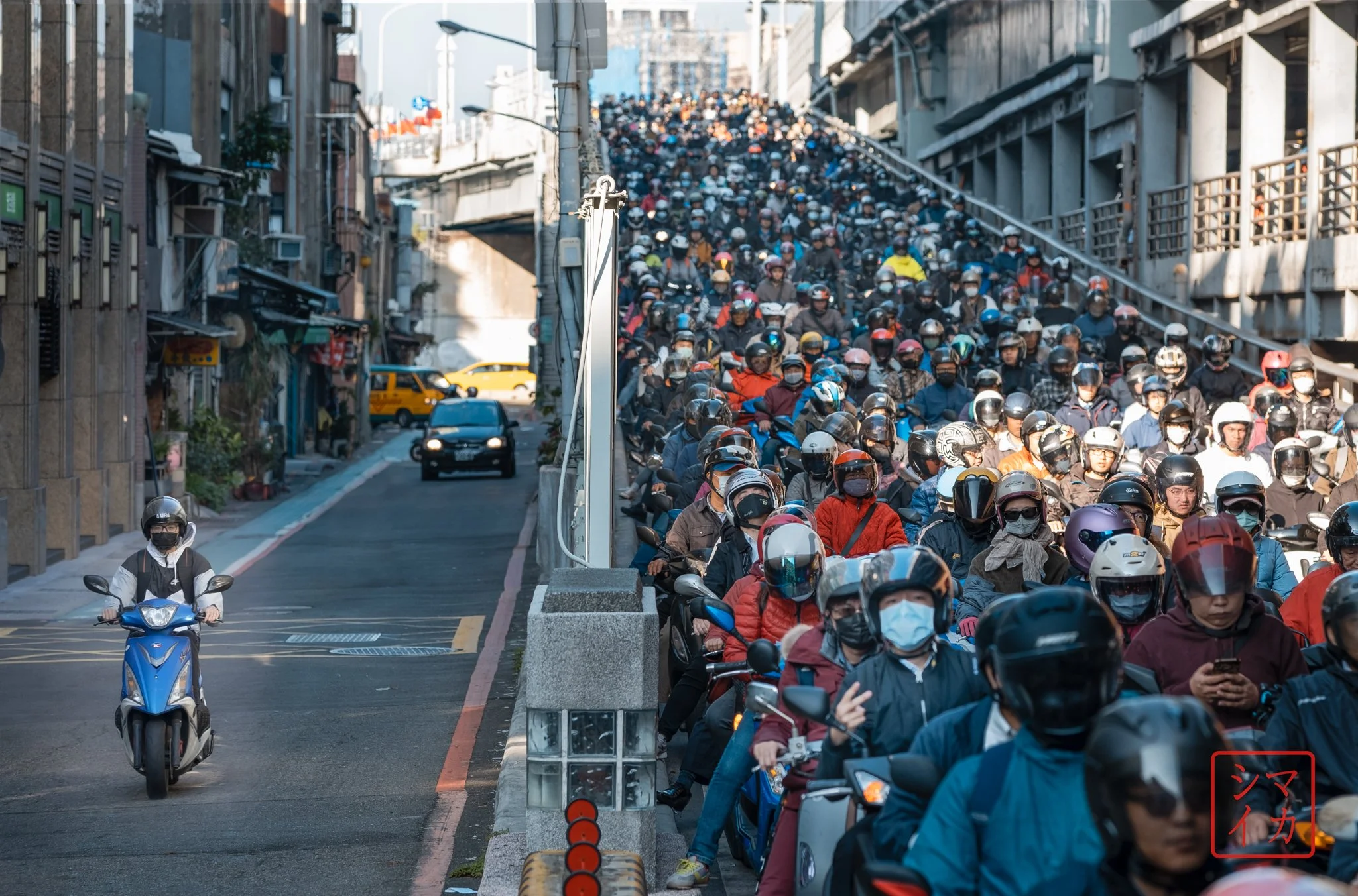
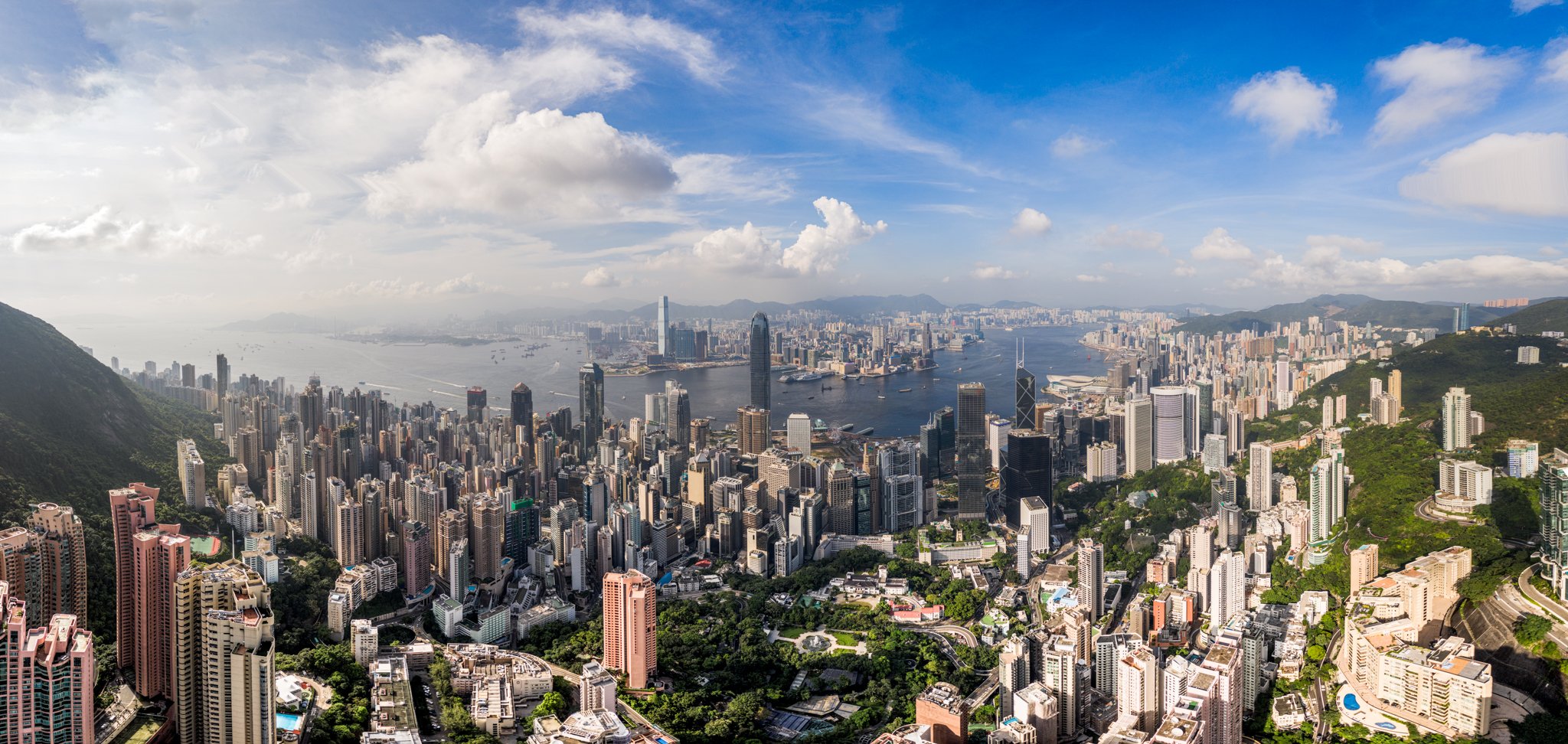
• 2019: Bali → Thailand → Hong Kong → Taiwan → Switzerland → Taiwan → Japan → Switzerland → Hong Kong → Taiwan
The question I get asked most is: how do you manage to stay there? The answer is simple and not very glamorous. I usually stay one to three months in each place, depending on the visa available on arrival. The visa rules set the rhythm, and I follow it. I avoid breaking any rules at all costs, so I can always come back and never have problems with the authorities. There are too many cases in the news, I have no interest in becoming one of them, and frankly, I'm way too scared of that.
When the world stopped, everything connected
In February 2020 I flew back from Hong Kong, Taiwan and Seoul while countries were literally closing behind me. At the end of the month, we started briefing the "car explainers" for the Geneva Motor Show, as we had for the previous 10 years. The pandemic reached the class on day one. Everything stopped.
By June, all our trainings were cancelled, with no alternative. Except I wanted one.
I'd been watching YouTubers like Casey Neistat and Peter McKinnon showing their setups, and thought: a product launch could be broadcast live without a headquarters-sized budget. The client's first answer: "We don't have the budget for a live production." My answer: we don't need high tech. Three cameras, some lav mics, a few lamps. A mobile studio, for a fraction of the cost.
Camera and light were no secret to me anymore. I just had to learn the last piece of the puzzle: sound. Then make it all work together: mixing desk, Stream Deck, OBS, Blackmagic, Aputure, Godox. For two weeks, from the garage where Renault trains its technicians, we launched new car models live for the entire Swiss and Austrian market, with chat and direct interaction on camera.
That year brought more revenue and more contracts than the years before it.
Every skill I had picked up "by accident" over 25 years came together in that garage: the communicator, the photographer, the tech nerd, the car-industry trainer.
The following year, distance and differences changed things, and my role in training came to a stop.
In 2021, I caught one of the last available flights to Thailand. The country was locked down, so I rented a car and drove it for five months: 17,000 km, through Ayutthaya, Sukhothai, the bridge over the River Kwai, mountains, beaches, temples without their crowds, resorts already half swallowed by nature. My drone loved it.
2022 was a year of moving: Thailand, Bali, Marseille, Switzerland. Barely working, living on savings, wondering how, where, how much.
In early 2023, Hubert and I talked about options, and I proposed an idea. Companies design amazing products and polish every detail, except the slides they present them with: templates from 1996, overloaded pages, no concept. So we started redesigning how companies present their products, so they could do it with the same pride in their slides. Naturally, Formation4You's own identity grew out of that too, and today I take care of it.
2023, the year of Japan
Japan first entered my life in 2018: five weeks with a JR Pass, from Tokyo to Osaka, Fukuoka, Kyoto, Kanagawa and Sendai, by train and on foot, taking thousands of pictures. I'm no manga fan. No anime, no drift, no Pokémon. Just curious about a culture I didn't know and didn't relate to. It was a shock, a revelation, a shift.
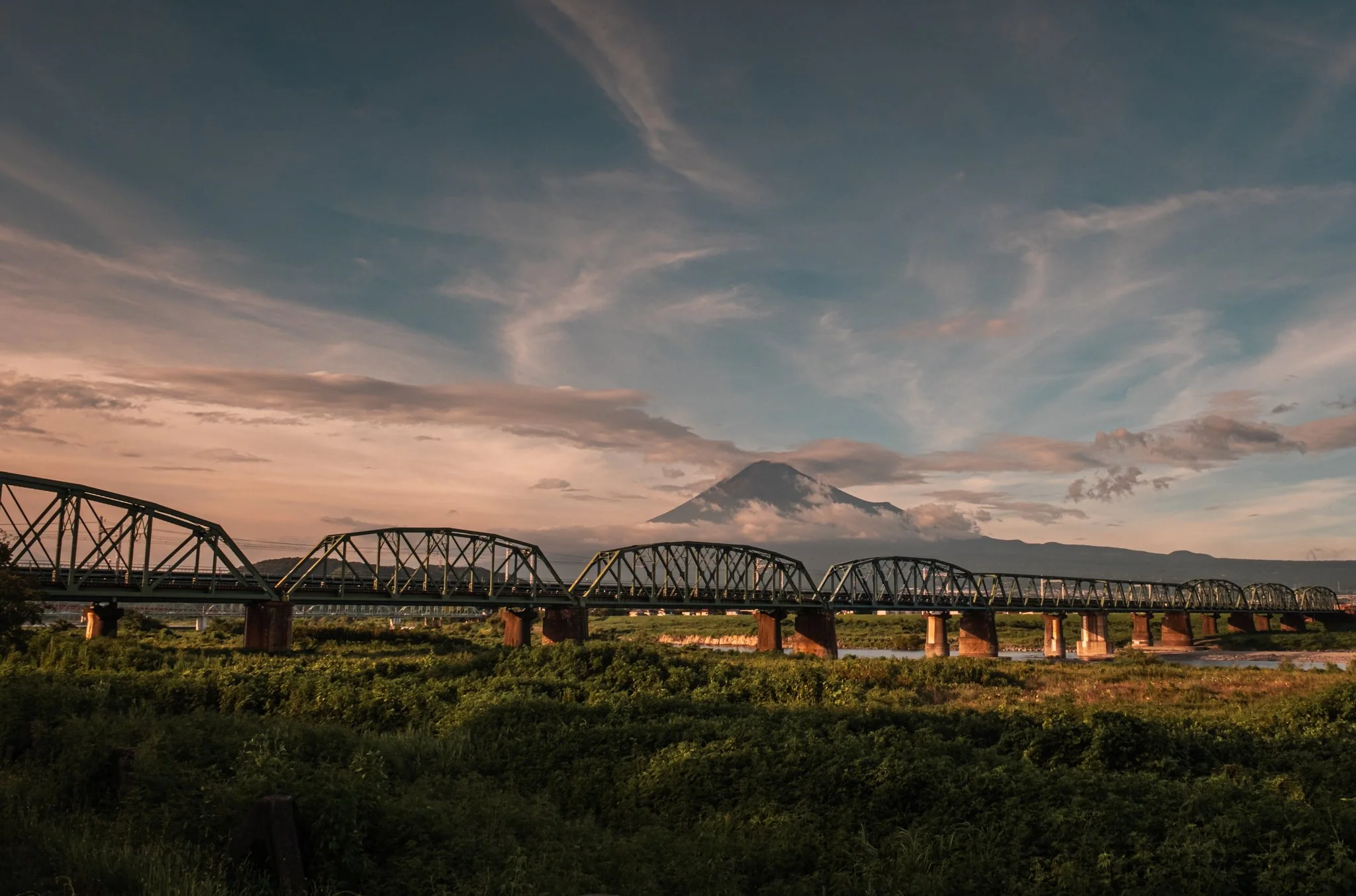
In 2019 I came back for two weeks by car. I saw Mount Fuji for the first time, tried to make sense of kanji, hiragana and katakana, and of the famous unwritten rules.
Then the pandemic locked me in our Zurich office. So I spent almost 300 hours learning Japanese online with a teacher based in Canada: reading, writing, grammar.
Languages do that to me, as German, Swiss German, Spanish and Hungarian did before. I don't aim for perfection, even if I try my best. What drives me is connecting the dots between languages, cultures, history, habits and the way people communicate. I've often been told I talk too much and think too much. Maybe. But that's exactly what turns me into an unstoppable sponge.
In 2023, I discovered that Japan grants 90 days on entry, twice a year. So I did what I prefer: slow down and absorb, while working remotely. Fukuoka, Nagasaki, Himeji, Osaka, Tokyo... and then Yokohama, where I fell in love.
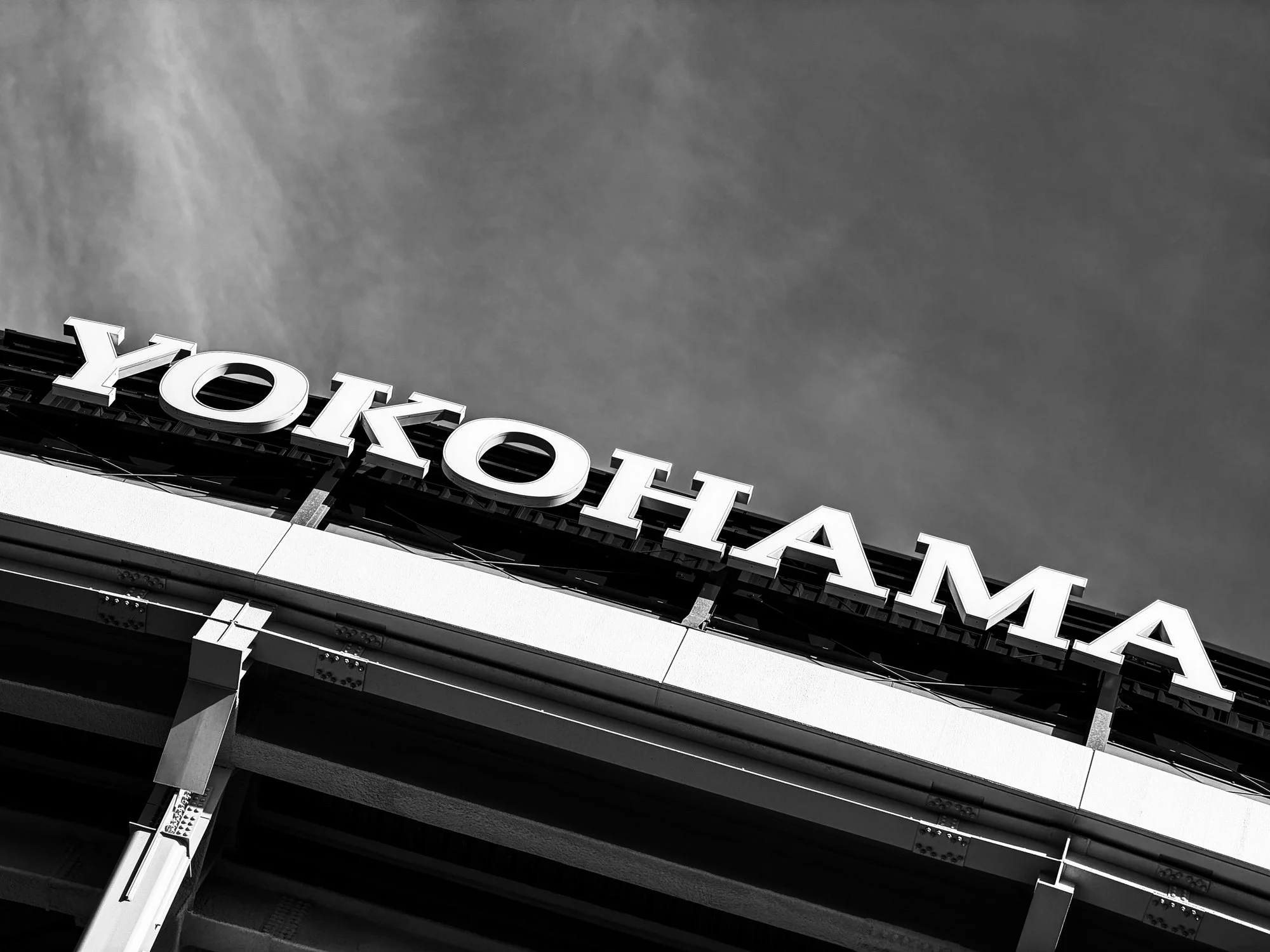
An hour from central Tokyo, next to Haneda airport, close to Mount Fuji and Enoshima. Japan's second-largest city, with everything you could want, and a new event at the Red Brick Warehouse every weekend. The city where Commodore Perry's Black Ships forced Japan to open to the world. And the sea air, which is all I need.
I used my full 180 days that year, with a short escape to Taiwan in between. That's when I realised I could live there. Japan ticks every box on my list:
• Learning, a culture rich enough to keep me learning for a lifetime (I told you!)
• Respect, safety and politeness
• Travel, sea, mountains, hiking, relaxing, all year long, never boring
• Food, absolutely fabulous
And here comes the irony. In 2025 I earned a TEFL certificate, with a Business English specialisation, hoping it would let me work in Japan. But a Japanese work visa usually requires a university degree. The one dream I can't reach yet is blocked by the very thing this article says isn't the key.
Slower, and the price of freedom
Since 2017, a drone has travelled in my bag everywhere I went, showing me places from the sky. Today I fly two, with the EU A1/A3 and A2 certificates and registrations in Switzerland, Japan and Thailand. FlySign finally lives up to its name.
The last few years took me to Thailand, Japan, Marseille, Malaysia and Switzerland. I stayed longer in the same places and rushed less. And I noticed something: when you're always on the move, connections and social skills slowly fade. I'm not complaining, just pointing it out. When you can leave at any moment, people don't fully connect with you. And honestly, you hold back a little too, so you can leave without hard feelings.
That's the price of freedom nobody posts on Instagram.
So, should you choose one path?
From December 2025 to March 2026, I was back in Japan. Health slowed me down this year, and I'm working on getting back on my feet. This summer I returned to Europe, hoping for gigs, new opportunities, and time to take care of myself.
The opportunities aren't really showing up. Fewer redesigns, fewer trainings. The economy, wars, changing mentalities, and AI taking a big bite out of work many now believe is less "needed". Or maybe that's just my perception. Is it me? Is it AI? Is it the location? Am I overlooking something?
And then there's the feeling I've carried my whole life: impostor syndrome. The constant doubts, the insecurities, the voice saying I don't have the right paper. It's the heaviest thing I carry. It's also the engine that pushed me to learn every single skill in this story.
I'm still asking myself these questions. And for once, I'm not looking for a diploma to answer them.
Because if 30 years taught me anything, it's this:
• Skills compound. The print shop's eye ended up in Photoshop, the reception desk in training rooms, the photographer in a live broadcast studio.
• Learning beats certificates. I never stopped learning, and went back to school the moment a real problem needed it. The point was never the paper.
• Doors open through people and proof. A friend, a former boss, a client who saw the quality of the work. Not a title.
• Necessity is a teacher. Many of my best chapters started with a door closing.
Diplomas aren't useless. They're one key among many. But a world that only accepts that one key leaves a lot of people with real proof standing outside the door.
If I could sit down with the 16-year-old who just left school, with no diploma and no safety net, I'd tell him:
"Fasten your seatbelt, hold tight, it's going to be a very bumpy ride. But holy moly, you'll love it more than you'll regret it! You'll have a life most people won't even dream about."
What about you? Did you choose one path, or did your path choose you?